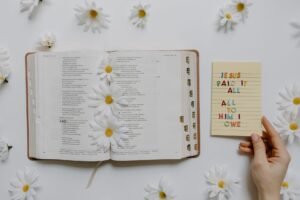
Today we will talk about how to read bible verses. Reading the Bible can help us know God, find wisdom, and grow in faith. We do not need to understand every passage at once. We can begin with a quiet moment, a willing heart, and a few lines of Scripture. As we read, we can ask what the passage says, what it shows us about God, and how it may guide our choices. We can also notice words or ideas that stand out and return to them later.
We can read alone or with others, aloud or silently, in a few minutes or for a longer time. The important thing is to come with patience and a desire to learn. When a verse is hard to understand, we can read the verses around it, pray for wisdom, and seek help from trusted Christian teachers. We can let Scripture encourage us, correct us, and point us toward Jesus. There is no need to rush. As we keep coming back to God’s Word, we can discover more of its hope and meaning. Let us take a thoughtful breath and be ready to listen as we explore how to read bible verses together.
Let us be in a mode of meditation as we read God’s Word.
how to read bible verses
Come to the Bible with a Willing Heart
When we learn how to read bible verses, we can begin by coming with a willing heart. We do not have to bring perfect knowledge or have every question answered. We can simply ask God to help us notice what we need to see. A willing heart is ready to learn, even when a passage challenges our habits or offers a new way to think. It also helps us read with care instead of rushing to finish a page.
As we open the Bible, we can pause and remember that understanding often grows over time. A verse may seem simple today and speak to us in a fresh way later. We can read slowly, look closely at meaningful words, and ask what the passage teaches about God and faithful living. When we approach Scripture with humility and hope, reading becomes more than a task. It becomes a chance to listen, grow, and draw closer to God together.
Psalm 119:18
“Open thou mine eyes, that I may behold wondrous things out of thy law.” – Psalm 119:18
1 Peter 2:2
“As newborn babes, desire the sincere milk of the word, that ye may grow thereby:” – 1 Peter 2:2
Jeremiah 15:16
“Thy words were found, and I did eat them; and thy word was unto me the joy and rejoicing of mine heart: for I am called by thy name, O Lord God of hosts.” – Jeremiah 15:16
Ask God for Wisdom as We Read
As we explore how to read bible verses, we can make prayer part of our reading. Prayer does not need to be long or use special words. We can ask God to give us wisdom, patience, and understanding. We can also ask for help with a particular question, or for strength to follow what we learn. This helps us remember that Bible reading is not only about gathering facts; it is also about seeking God’s guidance for our lives.
Sometimes we may not understand a passage right away. That is all right. We can read it again, notice what comes before and after it, and ask a trusted believer or teacher for help. We can hold our questions honestly instead of pretending to know more than we do. As we keep praying and learning, our understanding can grow. Together, we can trust that God welcomes our desire to seek wisdom and encourages us to keep asking, listening, and learning.
James 1:5
“If any of you lack wisdom, let him ask of God, that giveth to all men liberally, and upbraideth not; and it shall be given him.” – James 1:5
Psalm 25:4
“Shew me thy ways, O Lord; teach me thy paths.” – Psalm 25:4
Luke 11:9
“And I say unto you, Ask, and it shall be given you; seek, and ye shall find; knock, and it shall be opened unto you.” – Luke 11:9
Listen Carefully and Welcome the Message
Knowing how to read bible verses includes learning to listen well. We can set aside distractions when we are able, read a passage more than once, and pay attention to what it actually says. It may help to read aloud or to write down a word that catches our attention. We can ask: Who is speaking? Who is listening? What is happening? These simple questions help us slow down and notice the passage rather than making it say whatever we expect.
Listening also means being open to change. Some parts of the Bible comfort us, while others correct us or invite us to act with more love. We can receive the message with patience instead of turning away when it feels difficult. We do not need to judge ourselves harshly; we can learn one step at a time. As we listen with honest hearts, we make room for Scripture to shape our thoughts and choices. We can encourage one another to keep listening, even when understanding takes time.
James 1:19
“Wherefore, my beloved brethren, let every man be swift to hear, slow to speak, slow to wrath:” – James 1:19
Luke 8:15
“But that on the good ground are they, which in an honest and good heart, having heard the word, keep it, and bring forth fruit with patience.” – Luke 8:15
Hebrews 2:1
“Therefore we ought to give the more earnest heed to the things which we have heard, lest at any time we should let them slip.” – Hebrews 2:1
Read the Verses Around the Passage
When we learn how to read bible verses, it is helpful to look beyond a single line. The verses around a passage can show who is speaking, what question is being answered, or what event is taking place. A verse can be misunderstood if we separate it from its setting. We can read the whole paragraph or chapter, then return to the verse we first noticed. This gives us a fuller picture and helps us avoid building an idea on only a few words.
We can also consider the kind of writing we are reading. The Bible contains history, poetry, letters, wisdom, and other forms of writing. Each kind may communicate in a different way. We can notice repeated ideas, important people, and the reason a passage was written. Reading carefully does not take away the wonder of Scripture; it helps us appreciate its meaning more fully. As we do this, we can grow in confidence and share what we learn with care and kindness.
Nehemiah 8:8
“So they read in the book in the law of God distinctly, and gave the sense, and caused them to understand the reading.” – Nehemiah 8:8
Acts 17:11
“These were more noble than those in Thessalonica, in that they received the word with all readiness of mind, and searched the scriptures daily, whether those things were so.” – Acts 17:11
2 Timothy 3:16
“All scripture is given by inspiration of God, and is profitable for doctrine, for reproof, for correction, for instruction in righteousness:” – 2 Timothy 3:16
Meditate on What We Read
Part of how to read bible verses is giving a passage time to settle in our minds. Meditation here means thoughtful attention. We can read a short section, pause, and think about its meaning. We might repeat a key phrase quietly or write it in a notebook. We can ask what the passage teaches about God, what it says about people, and what hope or wisdom it offers. There is no need to force a quick answer.
Slow reading can help us notice details we might miss when we hurry. We can return to the same passage over several days and see what becomes clearer. A verse may guide us during a hard moment or remind us to be thankful in an ordinary one. We can carry its message into our conversations and decisions. When we meditate on Scripture, we are not trying to make it say whatever we want. We are giving ourselves time to understand it and to respond with faith, patience, and care.
Joshua 1:8
“This book of the law shall not depart out of thy mouth; but thou shalt meditate therein day and night, that thou mayest observe to do according to all that is written therein: for then thou shalt make thy way prosperous, and then thou shalt have good success.” – Joshua 1:8
Psalm 1:2
“But his delight is in the law of the Lord; and in his law doth he meditate day and night.” – Psalm 1:2
Psalm 119:15
“I will meditate in thy precepts, and have respect unto thy ways.” – Psalm 119:15
Look for How Scripture Points to Jesus
As Christians, we can include Jesus in our understanding of how to read bible verses. The Bible’s books were written in different times and settings, and each passage deserves careful attention. At the same time, the story of Scripture helps us know God’s work and the hope Christians find in Jesus. We can ask how a passage fits into the larger story of God’s care, promises, and plan for people.
We should not force every verse to mean something it does not say. Instead, we can read carefully and notice what the passage teaches in its own setting. We can also learn from the way Jesus used Scripture and from the New Testament’s teaching about him. This approach helps us read with both care and faith. As we see how the Bible’s message leads us toward God, we can grow in gratitude and trust. We can read with open minds and remember that learning about Jesus is a lifelong journey.
Luke 24:27
“And beginning at Moses and all the prophets, he expounded unto them in all the scriptures the things concerning himself.” – Luke 24:27
John 5:39
“Search the scriptures; for in them ye think ye have eternal life: and they are they which testify of me.” – John 5:39
Hebrews 1:2
“Hath in these last days spoken unto us by his Son, whom he hath appointed heir of all things, by whom also he made the worlds;” – Hebrews 1:2
Put What We Learn into Practice
Reading the Bible can guide the way we live. When we think about how to read bible verses, we can ask how a passage might shape our actions, attitudes, and relationships. It may encourage us to forgive, tell the truth, show kindness, or ask for help. We do not have to change everything in one day. We can choose one clear step and ask God to help us take it with care and courage.
Putting Scripture into practice does not mean trying to earn God’s love. Rather, we can respond to what we learn because we want our lives to reflect our faith. Sometimes we may stumble or forget, and we can begin again. We can talk with trusted Christians about practical ways to live out a passage. As we take small steps, the Bible becomes part of our daily choices—not just something we read and leave behind. Together, we can encourage each other to act with love and wisdom.
Psalm 119:105
“Thy word is a lamp unto my feet, and a light unto my path.” – Psalm 119:105
Matthew 7:24
“Therefore whosoever heareth these sayings of mine, and doeth them, I will liken him unto a wise man, which built his house upon a rock:” – Matthew 7:24
James 1:25
“But whoso looketh into the perfect law of liberty, and continueth therein, he being not a forgetful hearer, but a doer of the work, this man shall be blessed in his deed.” – James 1:25
Read and Learn with Other Christians
We can read the Bible on our own, and we can also learn with other Christians. As we consider how to read bible verses, it helps to hear how others understand a passage. A church group, family reading time, or conversation with a trusted believer can bring fresh questions and useful insights. We can listen respectfully, share what we notice, and check ideas against the words and setting of Scripture.
Reading together does not mean that everyone will have the same experience or answer every question right away. We can make space for honest questions and different points of view, while seeking understanding with humility. We can encourage one another to keep reading and to put the message into practice. A caring community can remind us that we are not alone in our faith. By learning together, we can grow in wisdom, strengthen our friendships, and help each other stay close to God’s Word.
Colossians 3:16
“Let the word of Christ dwell in you richly in all wisdom; teaching and admonishing one another in psalms and hymns and spiritual songs, singing with grace in your hearts to the Lord.” – Colossians 3:16
Acts 2:42
“And they continued stedfastly in the apostles’ doctrine and fellowship, and in breaking of bread, and in prayers.” – Acts 2:42
Hebrews 10:24
“And let us consider one another to provoke unto love and to good works:” – Hebrews 10:24
Find Comfort and Hope in Scripture
As we learn how to read bible verses, we can turn to Scripture in joyful seasons and difficult ones. The Bible does not promise that life will always be easy, but it shares stories of people who faced trouble and found hope in God. We can read passages of comfort slowly and let their message remind us that we are not forgotten. We may also find courage in the way Scripture speaks about God’s faithfulness and care.
When we are hurting, we do not need to hide our feelings or rush ourselves to feel better. We can bring our worries to God and ask a trusted friend to read or pray with us. A comforting verse may not solve every problem, but it can help us feel less alone and point us toward hope. We can also share Scripture gently with others, without assuming we know exactly what they need. Reading together can help us offer care with compassion and patience.
Romans 15:4
“For whatsoever things were written aforetime were written for our learning, that we through patience and comfort of the scriptures might have hope.” – Romans 15:4
Psalm 119:50
“This is my comfort in my affliction: for thy word hath quickened me.” – Psalm 119:50
2 Corinthians 1:3
“Blessed be God, even the Father of our Lord Jesus Christ, the Father of mercies, and the God of all comfort;” – 2 Corinthians 1:3
Build a Steady Habit of Reading
We do not need a perfect plan to learn how to read bible verses. A steady habit can begin with a few minutes each day or a few verses at a time. We might choose a book of the Bible and read it in order, or follow a simple reading plan. It can help to pick a regular time and place, but we can adjust when life gets busy. The goal is to keep returning to Scripture with a willing heart.
Some days we may feel focused, and other days our minds may wander. We can be patient with ourselves and start again without shame. A notebook can help us save questions, prayers, and ideas to revisit later. We can also remember that reading is not a race or a way to compare ourselves with others. Each small step can help us grow. As we keep reading, we can become more familiar with the Bible and more ready to recognize the hope and guidance it offers.
Acts 20:32
“And now, brethren, I commend you to God, and to the word of his grace, which is able to build you up, and to give you an inheritance among all them which are sanctified.” – Acts 20:32
2 Timothy 2:15
“Study to shew thyself approved unto God, a workman that needeth not to be ashamed, rightly dividing the word of truth.” – 2 Timothy 2:15
John 8:31
“Then said Jesus to those Jews which believed on him, If ye continue in my word, then are ye my disciples indeed;” – John 8:31
Final Thoughts
I believe reading the Bible can be a gentle, steady part of our lives. We can come with open hearts, ask for wisdom, and take time to understand each passage. We do not need to know everything at once; we can keep learning one step at a time.
We can read carefully, think about what we find, and share our questions with trusted Christians. When a passage gives us comfort or guidance, we can carry its message into our daily choices and relationships.
As we keep returning to Scripture, we can grow in faith, hope, and love. I encourage us to begin where we are, read at a pace that works for us, and trust that each thoughtful moment in God’s Word can help us grow.
Further Reading
30 Bible Verses About Getting Closer To God (With Commentary)
30 Bible Verses About Removing People From Your Life (With Commentary)
30 Bible Verses About Israel (With Explanation)
30 Bible Verses About Being Lukewarm (With Explanation)
4 Ways to Encounter Grace and Truth: A Study on John, Chapter 4