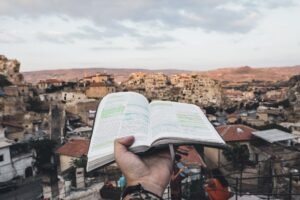
The Call to Endurance
The Christian life is rarely described in the pages of Scripture as a gentle stroll through a meadow. Instead, the biblical authors frequently employ the imagery of an athletic contest, a grueling journey, or a race that demands our full attention and unwavering commitment. This metaphor is not meant to imply that our salvation is earned through our own exertion, but rather that the life of faith is an active, dynamic pursuit of the One who first pursued us. When we consider the reality of our earthly pilgrimage, we are reminded that we are called to move forward, even when the path becomes steep or the horizon disappears behind the clouds of uncertainty.
In the New Testament, the apostle Paul frequently utilizes this imagery to describe the trajectory of a believer’s life. For Paul, the race was not merely a physical endeavor but a spiritual reality defined by total devotion to Christ. As we look at the lives of those who have gone before us, we see that finishing the race is less about our own innate capacity and more about the power of God working within us. The call to endurance is a call to remain tethered to the source of our strength, ensuring that our eyes remain fixed on the finish line that Christ has already crossed on our behalf. It is an invitation to walk in the light of truth, even when the shadows of the world seek to obscure our vision.
The Weight of the Past and the Joy of the Future
One of the most significant challenges in finishing the race is the baggage we often insist on carrying. We are told in Hebrews 12:1 to lay aside every weight and the sin that clings so closely, so that we might run with endurance the race set before us. This is a profound call to repentance and renewal. We cannot run effectively if we are burdened by the regrets of yesterday or the anxieties of tomorrow. The writer of Hebrews emphasizes that our focus must be singular, directed toward Jesus, the founder and perfecter of our faith. This requires a daily surrender, a shedding of the things that hinder our spiritual progress.
As we navigate this journey, we often find ourselves wrestling with the complexities of our history. Whether it is the weight of past mistakes or the fear of repeating them, these burdens can sap our spiritual strength. Yet, the gospel offers a different narrative. Through the grace afforded to us in Christ, we are invited to leave the past behind and reach forward to what lies ahead, as Paul describes in Philippians 3:13-14. This is not to say that we ignore our past, but rather that we refuse to let it define our future. By focusing on the prize of the upward call of God in Christ Jesus, we find the necessary perspective to keep moving forward, knowing that our ultimate identity is secure in the hands of the One who loves us.
Finding Strength in the Midst of Suffering
It would be a disservice to the complexity of the human experience to suggest that the race is always easy. On the contrary, the Bible is remarkably honest about the reality of suffering. Many of the great figures of faith, such as David, endured seasons of intense isolation, persecution, and doubt. Yet, even in the depths of his distress, David found the capacity to cry out to God, acknowledging that his strength was not his own, as seen in Psalm 18:1-2. Suffering, while difficult, often serves as a crucible that refines our faith and strips away the superficial dependencies that prevent us from fully trusting in God.
When we face the trials of life, we are reminded that perseverance is not the absence of pain, but the presence of trust. We are encouraged in James 1:2-4 to count it all joy when we meet trials of various kinds, knowing that the testing of our faith produces steadfastness. This is a difficult teaching, one that requires a perspective shift that can only come from the Holy Spirit. It is not that we enjoy the suffering itself, but that we find hope in the transformative work that God is doing through it. As we lean into the comfort of God, we find that our endurance is not a testament to our own grit, but to the sustaining grace that carries us through the fire.
The Necessity of Community and Unity
No one is meant to run this race alone. The culture of the modern world often prizes individualism and self-sufficiency, but the biblical witness points toward a different reality: the necessity of the body of Christ. In the context of the church, we find the encouragement, correction, and support needed to stay the course. The unity of the believers is a powerful witness to the world, and it serves as a vital support system for those who are weary. When one member of the body suffers, all suffer, and when one rejoices, all rejoice, as Paul explains in 1 Corinthians 12:26. This interconnectedness is essential for the long-term health of our faith.
Building deep, meaningful relationships within the family of God allows us to be held accountable and to be reminded of the truth when we are tempted to wander. We see this principle in the way the early church functioned in Acts 2:42, where they devoted themselves to the apostles’ teaching, fellowship, breaking of bread, and prayers. This communal rhythm was their lifeblood. As we share our burdens and celebrate our victories together, we find that the race becomes more manageable. We are reminded that we are part of a larger story, a grand narrative that spans generations, and our individual race is inextricably linked to the collective witness of the people of God.
Wisdom for the Long Haul
Wisdom is the practical application of truth, and it is indispensable for those who intend to finish the race. Throughout the book of Proverbs, we are reminded that the path of the righteous is like the light of dawn, which shines brighter and brighter until the full day, as noted in Proverbs 4:18. This progression suggests that wisdom is not a static destination but a growing capacity to discern God’s will in the changing circumstances of life. To finish well, we must cultivate a heart that is sensitive to the leading of the Spirit and a mind that is saturated with the word of God.
Guidance is often sought in the big decisions of life, but wisdom is most frequently exercised in the quiet, mundane moments of our daily routine. It is in how we speak to our neighbors, how we manage our resources, and how we respond to the inevitable frustrations of life. By seeking the wisdom of God in every situation, we protect ourselves from the pitfalls of pride and the entanglements of sin. We learn to prioritize that which is eternal over that which is temporal, ensuring that our energy is expended on the things that truly matter in the economy of God. This is the hallmark of a life well-lived—a life that finishes with integrity and grace.
The Role of Faith and Trust
At the heart of finishing the race is the foundational virtue of faith. Faith is not merely an intellectual assent to a set of doctrines; it is a living, breathing trust in the character and promises of God. Abraham is perhaps the quintessential example of this, as he stepped out into the unknown, trusting that the God who called him would be faithful to his word, as recorded in Hebrews 11:8. His life was a testament to the fact that faith is often lived in the absence of complete clarity, relying instead on the absolute certainty of who God is.
When we face the uncertainties of the future, we are invited to place our trust in the same God who sustained Abraham. This trust is the fuel for our endurance. It allows us to face the unknown with courage, knowing that our steps are ordered by the Lord, as suggested in Psalm 37:23. While Christian traditions may differ on the specifics of how faith and human effort interact—some emphasizing the sovereignty of God in our perseverance and others highlighting the necessity of our active cooperation—all agree that the starting point and the finishing point are anchored in the grace of God. Our faith is the bridge that connects our present struggle with our future hope.
Living with an Eternal Perspective
Finally, finishing the race requires us to live with an eternal perspective. It is easy to become so consumed by the immediate demands of our lives that we lose sight of the bigger picture. We are reminded in Colossians 3:2 to set our minds on things that are above, not on things that are on the earth. This does not mean we ignore our earthly responsibilities, but that we carry them out with an awareness of their place in the eternal kingdom of God. When we view our lives through the lens of eternity, the temporary nature of our trials becomes clear, and the weight of our burdens feels lighter.
As we approach the end of our earthly journey, the goal is not to have accumulated wealth or status, but to have remained faithful to the call of God. We want to be able to say, like Paul did in 2 Timothy 4:7, that we have fought the good fight, finished the race, and kept the faith. This is the ultimate aspiration of the believer. It is a life marked by holiness, shaped by love, and sustained by the hope of the resurrection. Whether our race is long or short, the measure of our success is found in our faithfulness to the One who loved us and gave himself for us.
Conclusion: The Reward of Faithfulness
The journey of faith is a lifelong commitment, marked by peaks and valleys, joys and sorrows, and the constant, steady presence of the Almighty. Finishing the race is not about our own perfection, but about the perfection of Christ, who has already secured the victory on our behalf. As we run, we are invited to keep our eyes fixed on him, to lean on one another for support, and to find our strength in the promises of Scripture. Every step taken in obedience, every moment of trust in the face of fear, and every act of compassion toward others is a testament to the work of the Spirit within us.
As we look toward the finish line, we do so with the confidence that the prize is not something we earn, but a gift we receive. It is the joy of hearing the words, “Well done, good and faithful servant,” as described in Matthew 25:21. This is the hope that sustains us when the path is difficult and the road is long. It is the promise that our labor is not in vain, and that the God who began a good work in us will bring it to completion at the day of Jesus Christ, as promised in Philippians 1:6. So, let us run with patience, let us run with purpose, and let us run with the assurance that we are never running alone.
In the quiet moments of reflection, consider the race you are currently running. Where are the areas where you feel the need for more strength, more wisdom, or more trust? Bring these before the Lord in prayer, knowing that he is the author and the finisher of your faith. He is the one who provides the grace for today and the hope for tomorrow. May you find the courage to keep moving forward, resting in the knowledge that your life is hidden with Christ in God. Your race is unique, your calling is specific, and the reward is eternal. Keep your eyes on the finish line, and trust the One who is walking every step of the way beside you.
As you continue your study, remember that the scriptures are a vast and deep well of encouragement. Whether you are reading through the Psalms, reflecting on the journeys of the prophets, or meditating on the letters of the apostles, let the truth of God’s word shape your understanding of your own journey. The race is a marathon, not a sprint, and it requires the steady, consistent application of truth to our hearts. May your life be a reflection of the hope that is within you, and may you finish your race with joy, looking forward to the glory that is to be revealed.
There is a profound beauty in the diversity of the race that each believer runs. Some are called to serve in public ways, others in the quiet corners of the home; some face intense persecution, while others face the subtle temptations of comfort and complacency. Regardless of the specific terrain, the call remains the same: to love the Lord your God with all your heart, soul, mind, and strength, and to love your neighbor as yourself. This is the essence of the race. It is a life of discipleship, a life of sacrificial love, and a life of total surrender to the will of God. As you continue to run, may you be filled with the peace that passes understanding, and may your heart be anchored in the truth of the gospel.
Finally, do not be discouraged by the setbacks or the seasons of dryness. They are not signs of failure, but opportunities for growth. They are moments where the Lord invites you to draw closer, to seek his face with greater intensity, and to rely on his power rather than your own. The race is a journey of transformation, and God is faithful to continue that work until the very end. Keep your eyes on the finish line, keep your heart open to the Spirit, and keep your feet moving in the path of righteousness. You are part of a great cloud of witnesses, and you are loved beyond measure by the One who calls you his own.