The Myth of Mere Optimism
In our modern cultural landscape, the concept of positive thinking has become a ubiquitous mantra. From self-help seminars to social media feeds, we are constantly encouraged to look on the bright side, manifest our desires, and maintain a sunny disposition regardless of the circumstances. While there is certainly value in having a grateful heart, the Christian life calls us to something far deeper and more robust than mere optimism. As we explore what Scripture says about our thought lives, we find that the Bible does not promise that we will always feel happy or that our circumstances will always be favorable. Instead, it offers a profound, unshakable hope that persists even when the world around us feels like it is falling apart.
When we look to the life of the apostle Paul, we see a man who was intimately acquainted with hardship, imprisonment, and physical suffering. Yet, his letters are filled with an irrepressible joy that defies human explanation. Paul did not practice positive thinking in the sense of ignoring his reality or pretending that his chains were comfortable. Rather, he practiced the discipline of setting his mind on the eternal realities of the gospel. In Philippians 4:8, we are instructed to think about things that are true, noble, right, pure, lovely, and admirable. This is not a psychological trick to bypass negative emotions; it is a spiritual command to align our internal perspective with the character of God. The difference between secular optimism and biblical hope is the object of our trust. Optimism relies on the belief that things will get better; hope relies on the belief that God is good, regardless of whether our situation improves in the way we might prefer.
The temptation to equate faith with a constant state of cheerfulness is a common pitfall in many Christian circles. However, if we examine the Psalms, we see that David often poured out his heart to God in raw, unfiltered lament. He did not suppress his anxiety or fear; he brought them directly into the presence of the Lord. Psalm 23:4 reminds us that even when we walk through the valley of the shadow of death, we need not fear, because the Lord is with us. This is the cornerstone of biblical thinking. Our comfort is not found in the absence of trouble, but in the presence of the Shepherd. As we navigate the complexities of life, we must be careful not to turn verses like Philippians 4:13 into slogans that ignore the context of suffering. We are called to be people of truth, and the truth includes the reality of our struggles as much as it includes the promise of our ultimate victory in Christ.
The Architecture of a Renewed Mind
The transformation of our thought life is a central theme in the process of sanctification. Romans 12:2 tells us that we are not to be conformed to the patterns of this world but to be transformed by the renewing of our minds. This is not a passive process. It requires intentionality and the active engagement of the Holy Spirit. When we speak of positive thinking in a biblical sense, we are really talking about the discipline of truth-telling to our own souls. We are constantly bombarded by lies—lies about our worth, our future, and the character of God. The antidote to these lies is the immersion of our hearts in the Word of God, which serves as the ultimate standard for what is true.
Consider the role of prayer in this mental architecture. Philippians 4:6-7 encourages us to present our requests to God with thanksgiving, promising that the peace of God, which transcends all understanding, will guard our hearts and minds in Christ Jesus. This peace is not a feeling we manufacture; it is a divine garrison that protects our thoughts from being overrun by the enemy. When we bring our anxieties to the Lord in prayer, we are acknowledging that He is sovereign over the very things that threaten to overwhelm us. This act of surrender is the polar opposite of the self-reliant, positive-thinking movements that suggest we have the power to change our reality through the strength of our own minds. In the Christian view, we are weak, but He is strong, and that is where our true strength resides.
Different Christian traditions emphasize the role of the human will in this process in varying ways. Some emphasize the necessity of cognitive reframing as a tool for spiritual growth, while others lean more heavily on the sovereign work of the Spirit in replacing our desires and thoughts. Regardless of the specific theological nuance, there is a broad consensus that we are called to bring every thought captive to the obedience of Christ, as noted in 2 Corinthians 10:5. This requires us to be discerning. We must examine our thoughts against the backdrop of Scripture. If a thought does not align with the nature of God as revealed in the Bible, it must be rejected. This is not about being negative; it is about being anchored in the truth, which is the only thing that can truly set us free.
Hope Amidst the Shadows of Suffering
It is easy to maintain a positive outlook when life is smooth and our families are healthy. But what happens when we face the harsh realities of a fallen world? The Bible does not shy away from the topic of suffering; it addresses it with profound honesty. Whether it is the physical pain of illness, the emotional weight of grief, or the social injustice that plagues our societies, Scripture provides a framework for processing these experiences without losing our hope. In Romans 5:3-5, we are told that we can rejoice in our sufferings because we know that suffering produces perseverance, character, and hope. This is a radical departure from the world’s view, which seeks to eliminate suffering at all costs or view it only as a sign of failure.
The story of Abraham is a powerful example of this kind of hope. When he was promised a son in his old age, he had to look beyond the reality of his own body and the barrenness of Sarah’s womb. Hebrews 11:19 tells us that he considered God to be able to raise the dead. His hope was not based on a positive assessment of his biological potential, but on the character of the God who made the promise. This is the essence of biblical faith. It is not an optimistic guess about the future; it is a firm conviction based on the faithfulness of God in the past. When we face our own ‘impossible’ situations, we are invited to look at the cross and remember that God has already accomplished the greatest miracle of all: the salvation of our souls.
We must also acknowledge that there are times when we feel like we are walking through the desert, much like the people of Israel as they traveled toward the promised land. The journey often feels long, and the challenges are frequent. Yet, even in the wilderness, God provided manna from heaven and water from the rock. Today, He provides the daily bread of His Word and the living water of His Spirit. When we feel overwhelmed by the weight of the world, we can look to the example of those who have gone before us. They were not perfect, and they were not always ‘positive’ in their outlook. They were, however, persistent in their trust. They kept showing up, kept praying, and kept looking to the Lord for their next step. This is the kind of perseverance that defines the life of faith.
The Role of Gratitude in Mental Health
Gratitude is often cited as a key component of emotional well-being, and the Bible confirms this in many places. 1 Thessalonians 5:18 tells us to give thanks in all circumstances, for this is God’s will for us in Christ Jesus. Notice that the command is to give thanks *in* all circumstances, not *for* all circumstances. We are not called to be thankful for evil or for the pain that sin causes in our world. Rather, we are called to maintain a posture of gratitude because we know that God is working all things together for the good of those who love Him, as stated in Romans 8:28. This perspective shifts our focus from what we lack to what we have been given in Christ.
Gratitude acts as a spiritual reset button for our minds. When we find ourselves spiraling into negativity or complaining, the act of naming specific blessings forces us to stop and acknowledge the grace of God. This is not a superficial exercise. It is a deep, theological recognition that every good and perfect gift comes from above, as James 1:17 reminds us. By cultivating a heart of gratitude, we are training our minds to see the hand of God in the ordinary moments of our lives. We begin to notice the beauty of a sunrise, the kindness of a friend, or the quiet comfort of a prayer answered. These small acts of recognition serve to anchor us when the storms of life arrive.
It is important to note that for some, the struggle with negative thought patterns is linked to complex mental health issues, and it is always wise to seek professional counsel alongside spiritual care. However, the spiritual discipline of gratitude remains a vital practice for all believers. It helps us to cultivate a sense of contentment, which is a great gain, as 1 Timothy 6:6 teaches us. Contentment is not about having everything we want; it is about realizing that in Christ, we already have everything we need. When we learn to be content with what we have, we are freed from the constant pressure to pursue more, to be more, and to prove more. This freedom is the foundation of a truly joyful life.
The Community of Faith as a Support System
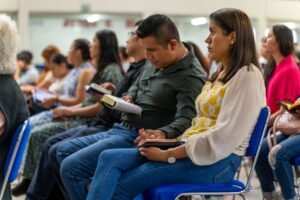
The Bible makes it clear that we were not created to live the Christian life in isolation. We are part of a body, and our mental and spiritual health is deeply connected to our relationships with one another. When we struggle to maintain a hopeful perspective, we need the voices of our brothers and sisters to remind us of the truth. Hebrews 10:24-25 encourages us to spur one another on toward love and good deeds and not to give up meeting together. This community aspect is vital. We need the encouragement of those who can see our blind spots and who can pray for us when we lack the strength to pray for ourselves.
Consider the importance of unity in the church. When we are united in the truth, we provide a safe harbor for one another. We can be honest about our struggles, our fears, and our failures, knowing that we will be met with compassion and grace rather than judgment. This kind of vulnerability is essential for healing. In a world that demands we always put our best foot forward, the church should be a place where we can admit that we are broken and in need of a Savior. This is not a sign of weakness; it is the ultimate expression of our dependence on God. As we support one another, we are reflecting the love of Christ, who came to seek and save the lost.
When we talk about the importance of family and community, we are also acknowledging that we are part of a larger story. We are not just individuals trying to manage our own thoughts; we are citizens of the kingdom of God. This perspective helps us to see beyond our own immediate problems and to participate in the work that God is doing in the world. Whether it is through acts of service, the pursuit of justice, or simply being a faithful presence in our neighborhoods, our lives take on a new meaning when they are lived for the sake of others. This outward focus is a powerful antidote to the self-absorption that often accompanies negative thinking. When we serve others, we are reminded that we are part of something much bigger than ourselves.
The Sovereignty of God as Our Ultimate Anchor
Ultimately, the reason we can have hope that goes beyond positive thinking is the sovereignty of God. If our peace depended on our ability to control our thoughts or our circumstances, we would be in constant turmoil. But the Bible assures us that God is on the throne, that He is working out His purposes in history, and that nothing can separate us from His love, as Romans 8:38-39 declares. This is the bedrock of our faith. When we feel like we are losing our grip, we can rest in the knowledge that He is holding onto us. This is not a passive resignation to fate; it is an active trust in the One who knows the end from the beginning.
The life of Joseph in the book of Genesis provides a profound illustration of this sovereignty. Sold into slavery by his brothers, falsely accused, and imprisoned for years, Joseph’s circumstances were anything but ‘positive.’ Yet, he remained faithful to God throughout every trial. In the end, he was able to say to his brothers, ‘You intended to harm me, but God intended it for good’ (Genesis 50:20). Joseph did not ignore the evil he had experienced; he acknowledged it. But he saw it through the lens of God’s larger, sovereign plan. This is the kind of perspective we are called to cultivate. It is a perspective that allows us to walk through the fire without being consumed, because we know that the Lord is with us in the flame.
As we conclude this reflection, let us remember that our goal is not to achieve a state of perfect, uninterrupted happiness. Our goal is to be faithful, to be holy, and to be conformed to the image of Christ. This journey will involve times of joy, but it will also involve times of sorrow. It will involve mountaintops, but it will also involve valleys. Throughout it all, we have the promise of His presence and the power of His Word. Let us fix our eyes on Jesus, the author and perfecter of our faith, who for the joy set before Him endured the cross, scorning its shame, and sat down at the right hand of the throne of God, as Hebrews 12:2 tells us. In Him, we find a hope that is both real and eternal.
Living Out the Truth in Daily Life
How do we practically apply these truths in the mundane details of our lives? It starts with the intentional practice of replacing our internal monologue with the voice of God. When the temptation to worry arises, we can replace it with the promise of Philippians 4:6. When we feel the sting of rejection, we can anchor ourselves in the truth of Ephesians 2:10, remembering that we are God’s handiwork. This is not about ‘positive thinking’ in the sense of denying reality; it is about ‘biblical thinking’ in the sense of grounding our reality in the truth of God’s Word. It is a daily, sometimes hourly, commitment to choose trust over fear and faith over despair.
We can also look to the example of those who lived in the shadow of the cross, like Mary, the mother of Jesus. She faced the daunting task of raising the Son of God, enduring the social stigma of her pregnancy, and eventually watching her son die a brutal death. Yet, her heart remained fixed on the Lord. Her song of praise in Luke 1:46-55 shows us that even in the midst of uncertainty, we can magnify the Lord. She understood that her life was not her own, and that her purpose was tied to the unfolding of God’s plan of salvation. We are called to that same surrender, trusting that even when we do not understand the path, the One who leads us is worthy of our complete devotion.
Finally, let us remember that our hope is not fragile. It is not something that can be taken away by the circumstances of this life. It is rooted in the resurrection of Jesus Christ, which is the ultimate proof that God has the final word over death, sin, and suffering. Because He lives, we can face tomorrow, and we can do so with a confidence that is not based on our own strength, but on the finished work of Christ. As you go about your week, look for opportunities to practice this biblical hope. Be honest with God about your struggles, be diligent in your study of His Word, and be intentional about surrounding yourself with a community that points you back to the truth. In doing so, you will find that your heart is guarded, your mind is renewed, and your life is anchored in a peace that truly passes all understanding.
The Enduring Power of God’s Word
The Bible is not just a book of wise sayings; it is the living and active Word of God, as Hebrews 4:12 reminds us. It has the power to pierce through our defenses, to heal our broken hearts, and to reshape our way of seeing the world. When we read Scripture, we are not just gaining information; we are engaging in a conversation with the Creator of the universe. This is why it is so important to make the reading of the Bible a foundational part of our daily routine. It is the primary way that God speaks to us, guides us, and reminds us of the truth when our own thoughts begin to fail us.
As we reflect on the topic of positive thinking, let us be encouraged to move beyond the shallow promises of the world. Let us pursue a life that is built on the solid rock of Christ. Whether you are currently in a season of abundance or a season of famine, know that you are loved by a God who knows your name, who understands your pain, and who is actively working for your good. Let your prayers be honest, let your gratitude be intentional, and let your hope be anchored in the unchanging character of the One who has promised to never leave you nor forsake you. This is the secret to a life that is truly full, truly joyful, and truly grounded in the hope that does not disappoint.
In closing, may we be people who are known not by our forced smiles or our relentless optimism, but by our deep-seated, unshakable peace. May our lives be a testament to the fact that we serve a God who is bigger than our problems, more faithful than our fears, and more loving than we can ever imagine. As we walk forward, let us do so with the confidence that comes from knowing that we are held in the palm of His hand. Let us continue to seek His face, to trust His heart, and to walk in the freedom that He has purchased for us through His death and resurrection. The journey of faith is long, but it is a journey worth taking, and we do not have to walk it alone. May the grace of the Lord Jesus Christ, the love of God, and the fellowship of the Holy Spirit be with you all as you seek to live for His glory each and every day.
The Call to Faithful Discipleship
Discipleship is the process of becoming more like Jesus in every aspect of our lives, including our thought lives. It is a lifelong commitment to follow Him, to learn from Him, and to be transformed by Him. This means that we are constantly growing, constantly learning, and constantly being challenged to let go of the things that hinder our walk with Him. When we talk about our thinking, we are talking about the very heart of discipleship. What we think about determines what we love, and what we love determines how we live. By aligning our thoughts with the truth of God’s Word, we are positioning ourselves to be more effective disciples, more loving neighbors, and more faithful witnesses to the grace of God.
We must also remember that our growth is not linear. There will be days when we feel like we are making great strides, and there will be days when we feel like we are taking steps backward. That is the nature of the Christian life. We are in a process of sanctification, a process that will not be complete until we see Him face to face. In the meantime, we are called to be patient with ourselves and with one another, trusting that God who began a good work in us will carry it on to completion until the day of Christ Jesus, as Philippians 1:6 promises. This is the ultimate comfort: our progress is not dependent on our perfection, but on His faithfulness.
As we seek to live out this call, let us be encouraged by the cloud of witnesses who have gone before us. They were not perfect, but they were faithful. They struggled with doubts, they faced trials, and they experienced the full range of human emotions. Yet, they kept their eyes on the prize and their hearts fixed on the Lord. We are invited to join them in this race, to run with perseverance the race marked out for us, as Hebrews 12:1 says. Let us do so with joy, with courage, and with the full assurance that we are running toward a home that is secure, a hope that is certain, and a Savior who is waiting for us with open arms. May our lives reflect the beauty of His grace, the power of His truth, and the depth of His love, now and forevermore.
The Ultimate Hope in the Resurrection
The final word on any discussion about our mental and spiritual outlook must be the resurrection of Jesus Christ. If Christ has not been raised, then our faith is futile, as 1 Corinthians 15:17 warns. But Christ has indeed been raised from the dead, and because He lives, we have a living hope. This hope is not just for the future; it is for the present. It is the power that enables us to live with joy in the midst of sorrow, to trust in the midst of uncertainty, and to love in the midst of a world that is often filled with hate. It is the foundation upon which all our thinking must be built.
When we face the realities of death, loss, or the brokenness of our world, we do not have to look for silver linings in the darkness. We can look to the empty tomb. We can look to the fact that God has already conquered the greatest enemy of all. This is the ultimate ‘positive’ truth, but it is not a superficial one. It is a truth that costs everything, a truth that was bought with the blood of the Son of God. It is a truth that changes everything about how we view ourselves, our purpose, and our future. It is the truth that gives us the strength to keep going, even when the path is difficult.
So let us be people of the resurrection. Let us be people who live in the light of the empty tomb. Let us be people who are defined not by our circumstances, but by our Savior. Let us be people who are constantly pointing others to the hope that we have in Him. Whether you are reading this from a place of great peace or a place of deep struggle, know that you are not alone. You are part of a family that spans across time and space, a family that is anchored in the same hope, a family that is waiting for the day when all things will be made new. Until that day, let us walk in the grace that has been given to us, and let us live lives that reflect the glory of the One who has called us out of darkness and into His marvelous light.
Conclusion: A Life Anchored in Truth
In this exploration of what the Bible says about our thought lives, we have seen that the Christian life is far richer than the shallow optimism of the world. We are not called to ignore the reality of our struggles or to pretend that everything is okay when it is not. We are called to something much more profound: we are called to be people of truth, people of hope, and people of faith. We are called to bring every thought captive to the obedience of Christ, to immerse our hearts in the Word of God, and to rely on the power of the Holy Spirit to transform our minds from the inside out.
This journey is not easy, and it is not meant to be done alone. It is a journey that requires the community of faith, the discipline of prayer, and the constant reminder of the grace of God. It is a journey that is marked by the presence of the Shepherd, even in the darkest of valleys. It is a journey that leads us to the foot of the cross, where we find the forgiveness of our sins, the healing of our hearts, and the hope of a future that is secure in Him. This is the life that we are called to live, and it is a life that is worth every step of the way.
As you move forward from this reading, I encourage you to take one step of faith today. Perhaps it is to spend a few minutes in prayer, to read a psalm of lament, or to reach out to a friend for support. Whatever it may be, know that God is with you, that He hears your prayers, and that He is working in your life in ways that you may not even realize. Keep your eyes fixed on Him, trust in His promises, and walk in the confidence of His love. You are a child of the King, and your life is a story that He is writing for His glory. May you walk in the peace that passes all understanding, and may your life be a radiant witness to the hope that is within you, now and forever. Amen.