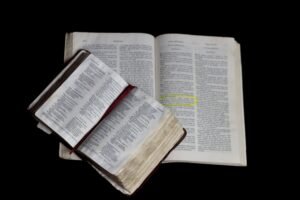
When the Horizon Grows Dark
We all experience seasons where the weight of the world seems to press down with an intensity that threatens to eclipse our sense of stability. These are the days when the morning light feels like an intrusion rather than a gift, and the tasks of ordinary life feel like insurmountable mountains. In such moments, the human heart naturally seeks a refuge—a place of quietude and clarity amidst the noise of personal struggle, relational friction, or the gnawing sense of uncertainty about the future. For the believer, this refuge is not found in the fleeting comfort of temporary distractions, but in the enduring, resonant truth of the Word of God.
Scripture does not promise that the life of faith will be devoid of hardship; in fact, the biblical narrative is replete with stories of individuals who faced profound darkness. From the wilderness wanderings of the people of God to the personal anguish of the prophets and the apostles, the Bible is a book written for people who know what it means to suffer. When we turn to the pages of the Bible on our worst days, we are not engaging in a form of escapism or spiritual denial. Rather, we are anchoring our weary souls in the reality of a God who is sovereign, present, and deeply invested in the restoration of his creation. This article seeks to explore how specific biblical truths can serve as steadying forces when our own strength is insufficient.
The Sovereignty of God in Our Suffering
One of the most profound challenges during a bad day is the temptation to believe that our circumstances have somehow escaped the notice of the Creator. When pain is acute, the silence of God can feel deafening. However, the testimony of Scripture consistently points to a God whose rule extends over every atom of the universe, including the very trials that threaten to undo us. In Romans 8:28, we are reminded that for those who love God, all things work together for good, a promise that is often misunderstood as a guarantee of immediate ease, but which is more accurately understood as a promise of God’s ultimate redemptive purpose in our lives.
Consider the life of David. Long before he was a king, he was a fugitive hiding in caves, haunted by the pursuit of those who wished him harm. In Psalm 23:1, he declares that the Lord is his shepherd, acknowledging that even in the valley of the shadow of death, he lacked nothing essential because of the presence of the Good Shepherd. David’s experience teaches us that sovereignty does not preclude suffering; rather, it provides the context within which our suffering is transformed. While Christian traditions vary on the precise mechanics of divine providence and human agency, there is a broad, historic consensus that God is never a bystander to the pain of his children. Trusting in this sovereignty is not a passive resignation, but an active, daily surrender of our need for total control, allowing us to find peace in the realization that we are held by a hand much larger and more capable than our own.
Finding Strength in Times of Weakness
When we are depleted, we often view our weakness as an obstacle to spiritual maturity. We want to be strong, self-sufficient, and unshakable. Yet, the biblical witness flips this perspective on its head. When Paul pleaded with the Lord to take away his thorn in the flesh, he was met with the counterintuitive response found in 2 Corinthians 12:9, where the Lord tells him that his grace is sufficient and that his power is made perfect in weakness. This is a vital truth for a bad day: your exhaustion is not a sign that God has abandoned you; it is the very space in which his power is most clearly demonstrated.
This reliance on divine strength is a hallmark of the life of faith. It requires a radical shift in how we view ourselves. We are accustomed to a culture that celebrates autonomy and independence, but the gospel invites us into a life of dependence. When we feel as though we have nothing left to give, we are in the perfect position to receive the strength that only God can provide. This is not about gritting our teeth and trying harder; it is about bringing our broken, weary selves to the throne of grace, trusting that the same God who sustained the prophets and apostles is equally capable of sustaining us through the current trial. By acknowledging our limitations, we stop pretending to be the heroes of our own stories and start participating in the greater story of God’s grace.
The Gift of Peace Amidst Anxiety
Anxiety & Fear are perhaps the most common companions of a bad day. The mind races, projecting worst-case scenarios and replaying past mistakes, creating a cycle of internal turmoil that is difficult to break. The Bible does not dismiss these feelings as trivial, but it offers a profound remedy in the form of the peace of God. In Philippians 4:6-7, the apostle Paul encourages the church to bring everything to God in prayer, promising that the peace of God, which surpasses all understanding, will guard their hearts and minds in Christ Jesus. This is a promise of divine protection for our internal lives, a fortress built of trust rather than circumstances.
This peace is not the absence of trouble; it is the presence of Christ in the middle of it. It is a peace that exists in the eye of the storm. When we feel overwhelmed, we can turn to Psalm 94:19, which speaks of the comfort of God when our cares are many. This comfort is not merely a warm feeling; it is a grounding truth. It reminds us that our anxieties do not define our reality. While different theological perspectives exist regarding how we should practically manage our mental and emotional health, there is universal agreement among believers that prayer is the primary posture for those seeking relief from the weight of worry. By casting our burdens upon the Lord, we are not just venting; we are participating in a relationship with the God who knows our frame and remembers that we are but dust.
Cultivating Hope Through Perseverance
Perseverance is a virtue that is only forged in the fire of difficulty. When we are having a bad day, it is easy to lose sight of the long-term perspective. We become myopic, focused only on the pain of the present moment. However, the scriptures constantly call us to look beyond the immediate horizon. In James 1:2-4, we are instructed to count it all joy when we meet trials of various kinds, not because the trials themselves are joyful, but because the testing of our faith produces steadfastness, leading to maturity and completeness. This is a difficult teaching, one that requires a deep, abiding hope that is rooted in something more substantial than our current emotional state.
The journey of Moses serves as a compelling example of this kind of long-term vision. He led a people through the wilderness for decades, facing constant rebellion, fear, and uncertainty. Yet, he remained committed to the call of God, sustained by his hope in the promise of a land he would only see from a distance. Like Moses, we are often called to walk by faith, not by sight. Our bad days are not dead ends; they are parts of a larger journey of sanctification. By focusing on the ultimate hope of the gospel, we can find the courage to take the next right step, knowing that our perseverance is not in vain. The God who began a good work in us is faithful to complete it, regardless of how dark the current chapter may seem.
The Depth of Compassion and Comfort
On our worst days, we often feel isolated, as if no one else could possibly understand the depth of our struggle. Yet, one of the most beautiful aspects of the Christian faith is the revelation of a God who is intimately acquainted with our sorrow. The concept of Compassion is woven throughout the entire biblical narrative. In Hebrews 4:15, we are told that we do not have a high priest who is unable to sympathize with our weaknesses, but one who in every respect has been tempted as we are, yet without sin. This means that when we suffer, we are not alone. We are joined by the presence of the One who suffered unto death for our sake.
This divine compassion is meant to be mirrored in our own lives, especially as we seek to support one another in the body of Christ. When we are having a bad day, we should not hesitate to reach out to our community. The burden is meant to be shared. In Galatians 6:2, we are commanded to bear one another’s burdens, and so fulfill the law of Christ. This is not just a suggestion; it is a fundamental aspect of Discipleship. When we share our pain, we are not showing weakness; we are showing a commitment to the unity of the body. By allowing others to comfort us, we are also allowing them to practice the love and mercy that God has poured into their own lives. We find that in the act of being comforted, we are often reminded of the very truths we were struggling to recall on our own.
Resting in the Truth of Grace
Finally, when we are at our lowest, the enemy of our souls often whispers that we are not enough, that we have failed, or that we are unworthy of God’s attention. This is where the doctrine of Grace becomes our most vital weapon. On a bad day, we may feel as though we have lost our footing, or that our recent actions have disqualified us from the peace of God. But the gospel tells a different story. In Ephesians 2:8-9, we are reminded that we are saved by grace through faith, and that this is not of our own doing, but is the gift of God. Our standing before God is not based on our performance on our best days, nor is it revoked on our worst days.
This truth allows us to breathe. It releases us from the crushing pressure of perfectionism. We do not have to earn our way out of a bad day. We simply have to return to the source of our life, which is the finished work of Christ. Whether we are dealing with the consequences of our own mistakes or the weight of external circumstances, grace is the floor beneath our feet. It is the steady, unmoving ground that remains when everything else feels unstable. As we meditate on this, we find that our bad days can actually become opportunities to experience the depth of God’s love in a way that we never would have in times of ease. We learn that his love is not conditional, and that his presence is not dependent on our ability to keep it all together.
Walking Forward in Faith
The reality of a bad day is inescapable in a fallen world, but the reality of the presence of God is even more profound. When we find ourselves in the depths, we are not lost. We are simply in a place where we must learn to rely on the promises of Scripture rather than the shifting sands of our emotions. Whether it is the endurance of the saints of old, the sovereignty of God over our circumstances, or the simple, unearned gift of his grace, we have everything we need to navigate the darkest of seasons. The Bible is not just a collection of ancient stories; it is a living, breathing map for the human heart in its most desperate moments.
As you move forward from this time of reflection, I encourage you to hold onto these verses. Write them down, commit them to memory, and speak them aloud when the silence of your own struggle feels too heavy. You are not walking this path alone. You are part of a long lineage of people who have found, time and time again, that the God of the Bible is faithful. He is the anchor in your storm, the light in your darkness, and the rest for your weary soul. May you find his peace today, not because your circumstances have changed, but because the God who holds you has not changed at all. Let this truth be your strength, your comfort, and your hope as you navigate the days ahead, trusting that even the hardest seasons are being used to shape you into the image of the One who loves you perfectly.
The Role of Scripture in Daily Resilience
It is worth noting that the practice of turning to Scripture is not meant to be a magical incantation that instantly evaporates our problems. Instead, it is a way of reorienting our entire perspective. When we read the Bible, we are engaging in a form of spiritual discipline that reminds us of the larger story. We are not just individuals struggling with a specific set of issues; we are citizens of a kingdom that is not of this world. This perspective shift is crucial. It allows us to view our bad days as temporary setbacks in the context of an eternal gain. In 2 Corinthians 4:17, Paul refers to our current afflictions as light and momentary, preparing us for an eternal weight of glory that far outweighs them all.
This does not minimize the pain of the present; it puts it in its proper place. It reminds us that while our current situation is real, it is not the final word. The final word belongs to the One who conquered the grave. This is the bedrock of our resilience. When we read the accounts of those who went before us—people who walked the dusty roads of Nazareth or stood on the banks of the Jordan River—we realize that they were human beings with the same fears, doubts, and struggles that we have. Yet, they persevered because they were anchored in the character of God. By immersing ourselves in their stories, we gain the courage to continue our own walk, even when the path is steep and the light is dim.
Embracing the Mystery of God’s Timing
One of the hardest aspects of a bad day is the waiting. We want relief, and we want it now. We want the pain to stop, the conflict to resolve, and the uncertainty to vanish. Yet, the Bible is full of stories about waiting. From the long years of preparation in the life of Abraham to the decades of silence between the Old and New Testaments, the theme of waiting on God is central to the life of faith. In Psalm 27:14, the psalmist writes, wait for the Lord; be strong, and let your heart take courage; wait for the Lord. This is a command that challenges our modern desire for instant gratification, but it also offers a promise of strength for those who are willing to wait.
Different Christian denominations emphasize the role of waiting in different ways. Some focus on the active nature of waiting—praying, serving, and staying faithful in the small things—while others emphasize the passive nature of surrender. Regardless of your tradition, there is a shared understanding that God’s timing is often different from our own. He is working in ways we cannot see, orchestrating events behind the scenes of our lives to bring about a good that we cannot yet comprehend. When we are having a bad day, we can find comfort in the fact that our waiting is not wasted time. It is a time of refinement, a time of deepening our trust, and a time of learning to rely on the One who holds the future in his hands.
The Power of Worship in the Midst of Sorrow
Finally, we must consider the role of Worship. It seems almost impossible to worship when we are hurting, yet it is precisely in those moments that worship becomes most powerful. Worship is not just singing songs on a Sunday morning; it is the act of ascribing worth to God in the middle of our circumstances. It is a declaration that even if everything else is falling apart, God is still worthy of our praise. In the book of Job, after losing everything, Job falls to the ground and worships, acknowledging that the Lord gives and the Lord takes away. This is not a denial of his pain; it is an act of defiance against the despair that seeks to consume him.
When we worship on our bad days, we are choosing to focus on the character of God rather than the chaos of our lives. We are choosing to trust that he is good, even when our circumstances suggest otherwise. This is a transformative act. It changes the atmosphere of our hearts and minds. It reminds us that we are not defined by our problems, but by the One who loves us and gave himself for us. Whether you find comfort in the quiet contemplation of the Psalms or the communal singing of hymns, the practice of worship is a vital tool for anyone navigating a hard day. It connects us to the eternal, pulling us out of the temporary and into the presence of the One who is our true home.
A Final Reflection on Grace
As we conclude this exploration, it is important to remember that the Christian life is not a solitary endeavor. We are called to live in community, to share our burdens, and to point one another toward the truth of the gospel. If you are having a bad day, do not try to carry it alone. Reach out to a friend, a mentor, or a pastor. Let them pray with you and remind you of the truths that you may be struggling to see for yourself. The body of Christ is designed to be a support system, a place where grace is not just talked about, but lived out in the messy, difficult realities of daily life.
Above all, keep turning to the Word. Make it your constant companion. Let the verses we have discussed—and so many others—be the words that you speak to your own soul when the world is loud and your strength is failing. You are held by a God who is sovereign, who is compassionate, who is strong, and who is gracious. Nothing can separate you from his love. Not your bad days, not your mistakes, and not your fears. You are his, and that is the most important truth of all. May you find the peace that passes understanding today, and may you continue to walk in the hope that is ours in Jesus Christ.
The Constant Presence of the Holy Spirit
It is impossible to discuss the comfort of God without mentioning the role of the Holy Spirit. Often referred to as the Comforter, the Spirit is the one who dwells within us, providing the strength and guidance we need to navigate the complexities of life. In our darkest hours, when we don’t even know how to pray, the Spirit intercedes for us with groanings too deep for words, as noted in Romans 8:26. This is a profound truth. It means that we are never truly alone, even when we feel the most isolated. We have the very presence of God living within us, advocating for us and sustaining us.
This indwelling presence is a source of constant, quiet power. It does not always manifest in dramatic ways; often, it is a gentle whisper, a nudge in the right direction, or a sudden sense of peace that doesn’t make sense given our circumstances. By staying attentive to the Spirit through regular prayer and reflection on Scripture, we can learn to recognize his voice and rely on his guidance. This is not about seeking mystical experiences; it is about living in a constant state of awareness of the one who is always with us. When we are having a bad day, we can simply pause and acknowledge the presence of the Spirit, asking for the grace to see our situation through his eyes and the strength to endure with his power.
The Importance of Humility in Our Struggles
Finally, we must address the role of Humility. It is easy to let our bad days lead to Pride—the pride of thinking we should be able to handle this on our own, or the pride of thinking that our suffering is unique and that no one else could possibly understand. Humility, however, allows us to admit that we are needy, that we are limited, and that we are dependent on God’s grace. In 1 Peter 5:6-7, we are told to humble ourselves under the mighty hand of God, so that at the proper time he may exalt us, casting all our anxieties on him because he cares for us.
This is the ultimate secret to navigating a bad day. It is the act of letting go of our own strength and embracing the strength of God. It is the act of admitting that we don’t have all the answers and that we don’t need to. It is the act of trusting that God is working, even when we cannot see the results. When we approach our trials with humility, we open ourselves up to the transformative work of the gospel. We stop fighting against the reality of our own limitations and start leaning into the infinite capacity of our Creator. This is a lifelong process, one that is marked by daily repentance and a constant turning back to the grace that covers all our failures and sustains us through all our trials.
Finding True Contentment
Contentment is often viewed as a luxury, something we can only afford when life is going well. Yet, the apostle Paul speaks of learning the secret of contentment in any and every situation, whether well-fed or hungry, living in plenty or in want, in Philippians 4:12. This secret, he explains, is found in the fact that he can do all things through him who strengthens him. This is a radical form of contentment—one that is not based on external circumstances but on an internal reality. It is a contentment that is rooted in the sufficiency of Christ.
When we are having a bad day, the temptation to be discontent is overwhelming. We want things to be different. We want our pain to stop. We want our circumstances to change. But true contentment is the ability to find peace even when things are not as we would like them to be. It is the realization that Christ is enough, no matter what. This does not mean we should not strive for better circumstances or seek help for our problems; it means that our joy is not dependent on those things. It means that our anchor is elsewhere. As we cultivate this kind of contentment, we find that our bad days lose their power to define us. We become less reactive to the ups and downs of life and more grounded in the unchanging reality of the gospel.
The Power of Forgiveness
Sometimes, a bad day is made significantly worse by the weight of unconfessed sin or the bitterness of unresolved conflict. Forgiveness is a central theme of the Christian life, and it is a vital tool for our emotional and spiritual health. In Colossians 3:13, we are instructed to bear with one another and, if one has a complaint against another, forgiving each other as the Lord has forgiven us. This is a challenging command, but it is one that offers immense freedom. When we hold onto bitterness, we are only hurting ourselves. We are allowing the past to dictate our present.
Forgiveness is not about excusing the behavior of others; it is about releasing the hold that their actions have on our hearts. It is about trusting that God is the ultimate judge and that he will make all things right in his time. When we forgive, we are reflecting the grace that we have received. We are choosing to let go of the debt that we feel is owed to us, and instead, we are choosing to walk in the freedom of the gospel. If your bad day is clouded by conflict or guilt, take it to the Lord. Seek his forgiveness for your own failures, and ask him for the strength to forgive those who have wronged you. You will find that this act of obedience is a key to unlocking the peace you have been searching for.
Conclusion: Anchored in the Word
As we reach the end of this reflection, I hope you feel encouraged to turn to the Bible not just as a book of rules, but as a source of life. Your bad days are not the end of your story. They are simply chapters in a larger narrative that is being written by the hand of God. When you feel lost, turn to the Psalms. When you feel weak, turn to the Epistles. When you feel afraid, turn to the Gospels. The Word of God is alive and active, capable of meeting you exactly where you are and providing the strength you need to keep going.
Remember that you are not alone. You are part of a community of believers who have walked this path before you, and you have the Holy Spirit living within you. You have the promise of God’s sovereignty, his compassion, his strength, and his grace. These are not just concepts; they are realities that you can lean on every single day. So, keep reading, keep praying, and keep trusting. Even on your worst days, you are held by the One who loves you more than you can imagine. May you find his peace, his comfort, and his strength today and every day, as you continue your journey of faith.